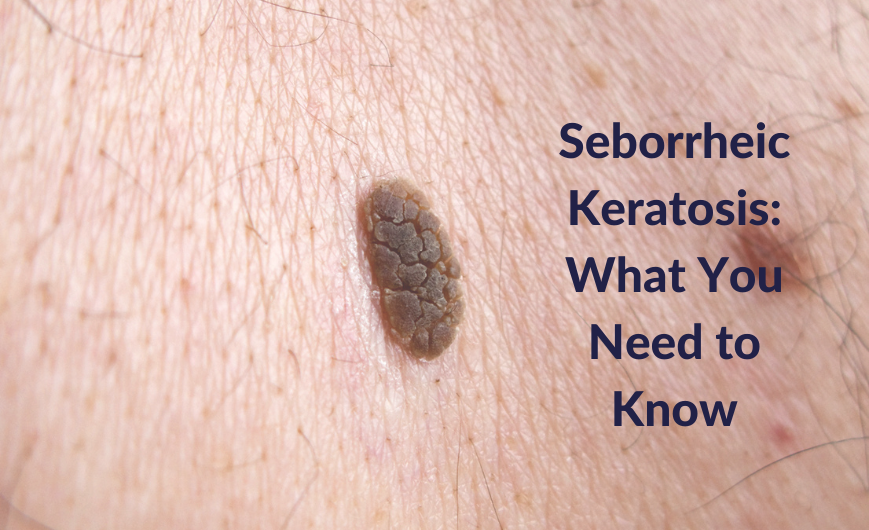
Progressing The Understanding Of Seborrheic Keratosis Journal Of Drugs In Dermatology While SKs can appear like these sores, there are differences that assist skin specialists identify seborrheic keratoses from various other lesions. A seborrheic keratosis is a noncancerous skin growth. They can range in color Find more information from light tan to dark brownish or black.
That Gets Seborrhoeic Keratoses?
What occurs if seborrheic keratosis is left unattended?
Seborrheic keratoses are harmless and not contagious. They do not require therapy, but you may decide to have them eliminated if they come to be irritated by garments or you do not such as exactly how they look.
There are times, though, when these lesions should be checked out by a skin doctor. Occasionally a SK expands rapidly, transforms black, itches, or bleeds, making it difficult to differentiate from skin cancer. Such a growth must be biopsied (removed and researched under a microscope) to figure out if it is cancerous or otherwise. This excessive production can cause the development of seborrheic keratoses sores. In regards to signs, people with seborrheic keratoses may experience hyperpigmentation and development in the impacted areas This Healthy Skin indicates that the pigmentation of the skin might be darker than surrounding areas. due to increased melanin production. However, this is not always the case as some lesions might appear lighter than regular skin tones. Seborrheic keratoses can be dark or brown, grey, black, tan, or skin-colored. Given that SKs are benign, treatment is typically not essential. For more information, contact our office today to schedule your assessment. Seborrheic Keratoses begin as hardly elevated, slightly bumpy, little plaques on the skin surface that may be either colored or otherwise colored. In time, these become raised, warty plaques that look like if "stuck on" to the skin surface, and are darkly pigmented and even black in darker people. These later growths may be anywhere from 1 to 6 cm, and rarely may be itchy or tender.
If you are unsure what sort of skin development you have, see your physician.
A seborrheic keratosis is the most typical noncancerous lump in older adults.
Seborrheic Keratoses are brought on by a boost in the production of skin cells, including pigment cells.
A hand rash, additionally called hand dermatitis or hand dermatitis, may be caused by numerous points.
What Is The Therapy For Seborrheic Keratosis?
Your use of this info suggests that you consent to the Terms of Usage. They appear to stick on the skin surface like barnacles. Communications via our internet site or by means of e-mail are not encrypted and are not necessarily safeguard. Use of the web or email is for your ease only, and by communicating with these digital networks, you presume the danger of any type of unapproved use. Age additionally plays a substantial duty in the incident of seborrheic keratosis lesions. It is more commonly observed in older people, specifically those above the age of 40 or 50. As we age, our skin undertakes different changes, including an increase in the production of keratinocytes-- the cells in charge of creating the outermost layer of our skin. Seborrheic Keratoses are really common, benign growths of the skin. The key professional attribute of seborrheic keratoses is they look as though they are pasted onto the surface of the skin. They are most frequently located on the breast or back but can basically lie anywhere on the body with the exemption of the palms and soles. They are typically numerous shades of brownish yet vary from light tan to black, and variety in dimension from 1-2 millimeters to several centimeters or bigger in dimension. Seborrheic keratoses often end up being inflamed, irritated and scratchy.
Seborrheic Keratosis Symptoms
They have actually been reported to happen in individuals of any ages consisting of kids as young as age 15 years. Domestic instances of seborrheic keratosis (SK) have actually been described with an autosomal dominant inheritance pattern. Anomalies of the fibroblast development factor receptor 3 gene (FGFR3) and the genetics inscribing for phosphoinositide 3-kinase (PIK3CA) have actually been demonstrated in SKs. In addition to a hereditary proneness, independent danger elements consist of progressing age and ultraviolet light direct exposure. The classic summary of a SK is a somewhat raised papule or skin lesion (plaque) with a soft, friable, hyperkeratotic surface, or a macule with a fine granular appearance.